
Resources · Daily practice
Start a notebook habit that lasts.
A gentle way to return to paper every day—without streaks, rigid systems, or pressure to fill the page.
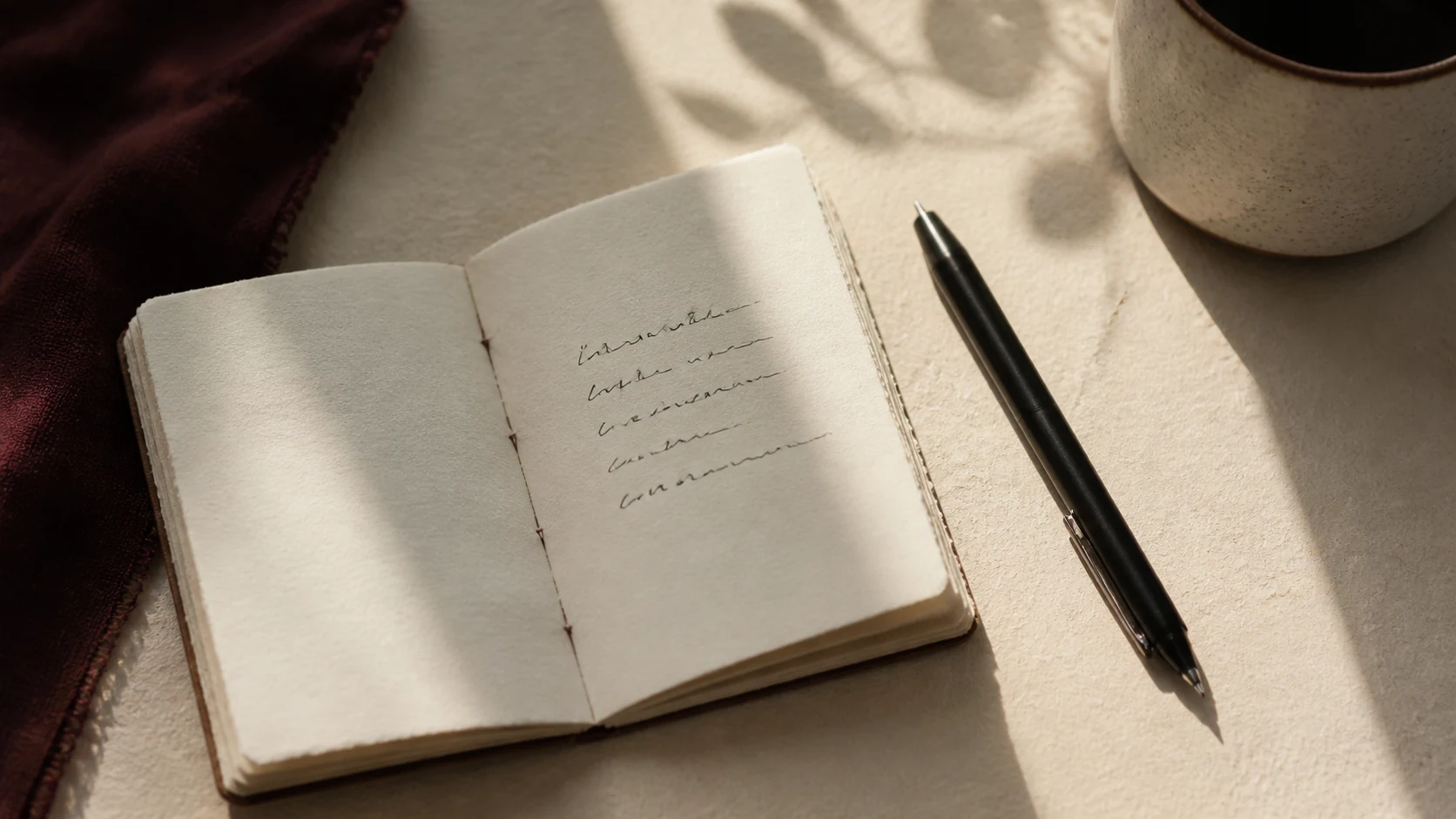
Make returning easy.
A notebook habit does not need a system, a perfect routine, or an hour of quiet. It begins with an open page, a pen, and a few minutes you can return to. The best practice is not the most disciplined one. It is the one that leaves the door open for tomorrow.
Choose a moment, not a schedule.
Attach the notebook to something that already happens: the first coffee, the train home, or the few minutes before bed. A familiar moment is easier to return to than an ambitious time slot that has to be protected.
Begin with: At this moment…Make one sentence enough.
A daily practice becomes fragile when every entry must be meaningful. Give yourself permission to write a single honest sentence. Most days, beginning is the only difficult part; on busy days, that one line still counts.
Stop after one sentence if that is all the day has room for.Keep the notebook in your path.
Put it where your hand already goes: beside your keys, inside the bag you carry, or next to the kettle. Visibility removes the small decision of remembering and turns the notebook into part of the room.
Choose its home before choosing your first prompt.Return to one simple prompt.
You do not need a fresh question every day. A dependable prompt creates just enough direction without deciding what the page must become. The same opening can hold a plan, a feeling, an observation, or nothing more than the weather.
Try: What do I want to remember from today?Write before you edit.
Leave the crossed-out words, unfinished lists, and awkward sentences where they are. A private notebook is a place for thoughts to arrive before they know what they mean. Neatness can wait; attention cannot.
When you pause, write the next true thing—even if it is incomplete.Miss a day without starting over.
A blank date is not a broken habit. Open to the next available space and continue. The goal is a notebook you return to, not an unbroken record that makes returning harder.
Do not explain the gap. Begin with today.Read back with curiosity.
Every few weeks, turn through the used pages and notice what repeats: names, questions, small worries, good ideas. Do not grade the writing. Let the notebook show you what has been asking for your attention.
Mark one line worth carrying forward.
Let small pages accumulate.
A lasting habit rarely feels dramatic while it is happening. It looks like a sentence before breakfast, a list on the bus, or a thought caught before sleep. Over time, those ordinary marks become a record no app could have made for you: evidence of what you noticed while your life was unfolding.