
Resources · Slow moments
Reach for paper, not the scroll.
Ten pocket-notebook rituals for the minutes between things—the ones a screen is always waiting to take.
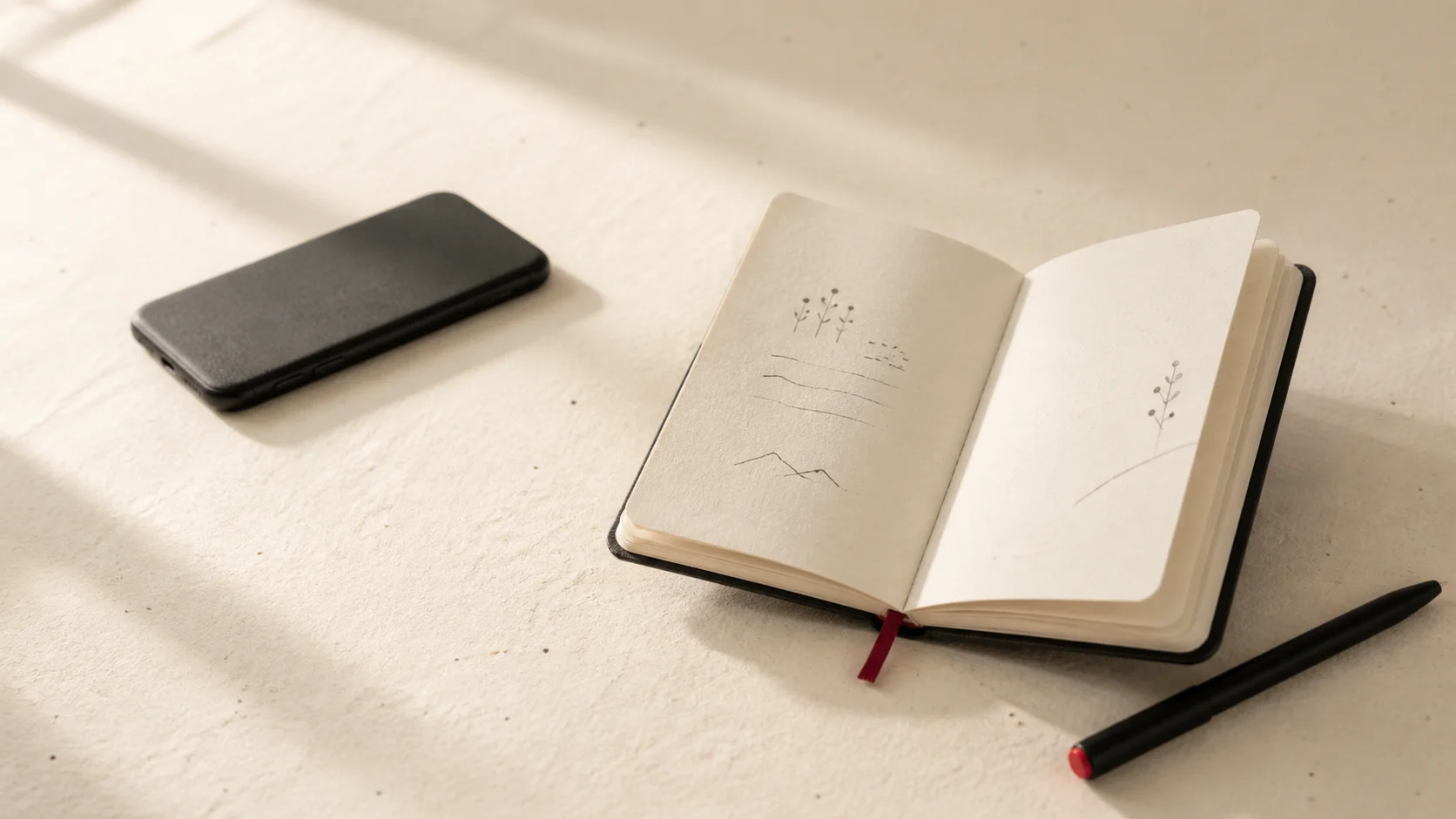
Keep the pause.
Many phone checks begin without a decision. A queue slows down, a friend is late, a thought becomes uncomfortable—and the screen fills the space. A pocket notebook offers a gentler reflex. It does not demand a streak, an audience, or another tap. It simply gives the moment somewhere to go.
Make a one-minute weather report.
When you have a spare minute, describe the moment as if you were reporting its weather: bright, crowded, slow, restless, hopeful. Naming the atmosphere helps you notice what is happening inside you without needing to solve it.
Begin with: Right now, the air feels…Collect one detail worth keeping.
Choose a single thing the camera roll would miss: the exact green of a door, the sound of cutlery in a café, a stranger’s excellent turn of phrase. One written detail can preserve more of a day than twenty hurried photos.
Record one colour, one sound, or one sentence.Write the next three moves.
When everything feels equally urgent, do not build a heroic master list. Write only the next three physical actions. The page becomes a small bridge between feeling stuck and beginning.
Keep each action short enough to start immediately.Leave a note for later-you.
Write to the person you will be tonight, next Tuesday, or next season. Remind them what mattered, what worked, or what they should not forget. A pocket notebook lets different versions of you stay in conversation.
Dear later me: please remember…Map a tiny walk.
Take the unfamiliar block, the longer path to the station, or the aisle you normally skip. Draw the route badly. Mark where you turned, paused, or found something interesting. The goal is attention, not cartography.
Add an X wherever something made you stop.Invent a five-line story.
Give yourself five lines and no pressure to be good. Start with something you can see, add a surprise, and stop before you explain too much. Small pages are excellent boundaries for playful thinking.
First line: Nobody noticed the…Make an enough list.
Instead of listing what is missing, write what is already sufficient: enough time for one task, enough food for dinner, enough courage for the next conversation. It is a practical counterweight to the endless appetite of a feed.
Today, I already have enough…Sketch the shape of an idea.
Some thoughts arrive before the words do. Use boxes, arrows, circles, fragments, or an unapologetically rough drawing. A page can hold an unfinished idea without asking it to perform.
Draw relationships first; label them afterward.Keep a question alive.
Write down a question you do not want answered instantly. Carry it for a day. Add observations underneath it when they appear. Curiosity deepens when it is given time instead of a search result.
Choose a question that begins with why, how, or what if.Close the day with one line.
Before bed, write one true sentence about the day. Not a summary and not a verdict—just one line you would be glad to find years from now. A daily life becomes visible one small mark at a time.
Today was the day that…
Let the notebook stay unfinished.
You do not need to use all ten ideas, write every day, or turn the notebook into a perfect archive. Dog-ear it. Cross things out. Abandon a list halfway down the page. Its value is not in becoming impressive. Its value is in helping you return to your own attention.